
Quest Hand Symbols: Pawn Knowledge, Numbers and Guidance
Research checked October 20, 2026 · 3 min read
A hand beside a quest in Dragon's Dogma 2 means a pawn in your current party knows something about that task and may offer guidance. Blue identifies your main pawn; the numbered hands identify your hired pawns. The hand is a help indicator, while an hourglass warns about a timed objective.
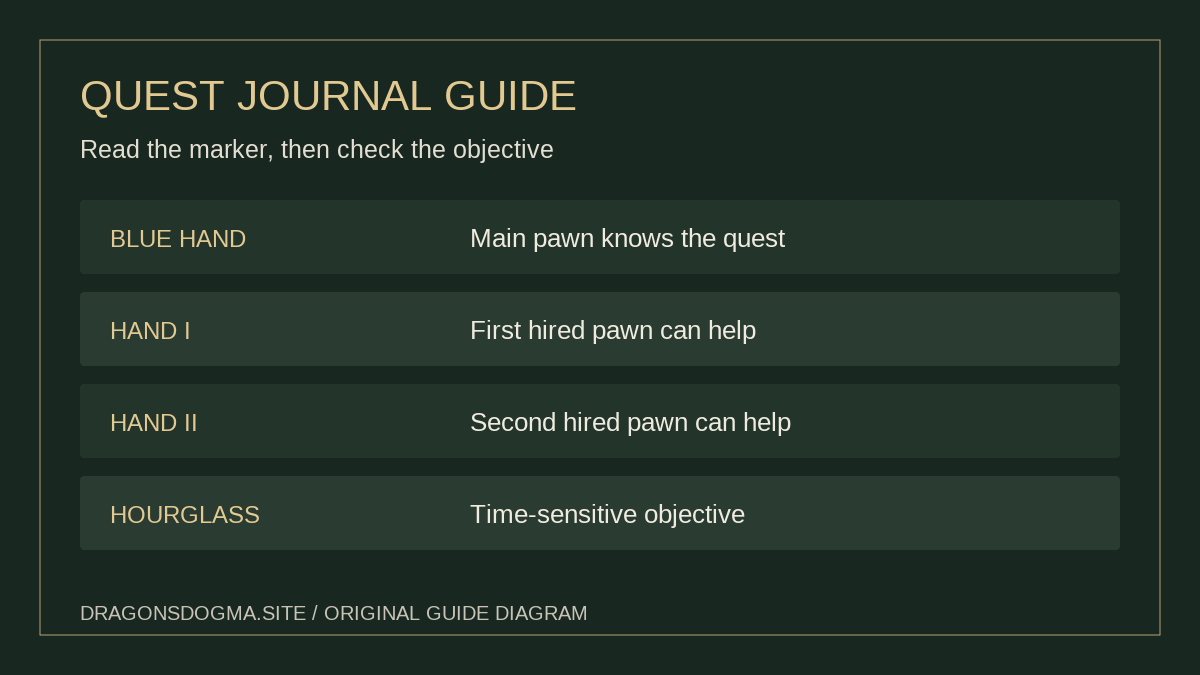
Read the blue hand and numbered hands
Use the journal symbol to identify the companion who can help with the selected objective. A blue hand belongs to the main pawn, I points to the first hired pawn, and II points to the second hired pawn. The numbers refer to party slots, rather than a quest difficulty rating or a count of objectives remaining.
| Journal marker | What to check |
|---|---|
| Blue hand | Your main pawn's guidance |
| Hand marked I | First hired pawn's guidance |
| Hand marked II | Second hired pawn's guidance |
| Hourglass | A time-sensitive quest objective |
Ask for guidance before choosing a route
Select the quest you actually want to work on, then listen when the knowledgeable pawn offers help. Respond with the Go command when a companion proposes leading you onward. Stay close enough to follow and check the destination against your journal; the offer is assistance with a task, not automatic completion of it.
What to do when the hand does not appear
An absent hand means you should not rely on an available pawn knowing that quest. Read the current objective, speak to the named NPC and use a walkthrough if the next step remains unclear. You can also review potential hires for relevant quest knowledge instead of selecting companions only by level or equipment; the pawn party guide covers their combat roles.
Guidance stops at restricted entrances
Do not dismiss your party simply because a companion cannot follow you into a castle investigation. Pawn access restrictions still apply, and you may have to investigate the interior yourself. Disa's Plot gives a practical example: finish the palace evidence step, leave the restricted grounds and rejoin your companions outside.
A hand does not tell you how long you can wait
Check the objective and NPC dialogue before spending days resting or making a long detour. An hourglass deserves particular attention, but the absence of a hand is not a promise that story progression cannot close a quest. Use the quest planning guide to separate urgent rescues, investigations and progression checkpoints.
Common questions about quest symbols
Does I or II mean a pawn level? No; match the number to a hired companion's party slot. Does a blue hand mean the quest is complete? No; check the objective and completion state separately. Should I follow a pawn instead of reading the journal? Use both: guidance helps you navigate, while the journal tells you what your current task requires.
If the selected objective changes, check the journal again before following another suggestion. For a first journey through Vernworth, the beginner guide explains how to plan a party and manage travel. Keep a known route or a written objective available when investigating places your companions cannot enter.
What does a brown or orange hand mean?
Brown or orange hands identify hired pawns; match I or II to the companion in that party slot. Blue identifies your main pawn. The same party symbols also appear in inventory and crafting menus, where the heart identifies the Arisen. Check which menu you are reading before interpreting the marker as quest guidance.